Problem 1. (10 points) A miscellany.
a.
    int[][] arr = new int[3][];
    arr[0] = new int[2];
    arr[1] = new int[3];
    arr[2] = new int[4];
Another way to do this is with an initializer:
int[][] arr = {new int[2], new int[3], new int[4]};
b. if (next != null && "Berkeley".equals(next.label)) {
Note that the example above also works correctly if next.label is null. A correct alternative would be
if (next != null && next.label != null && next.label.equals("Berkeley")) {
c. The signature of the method shatter is shatter(String yell). Shake.shatter is an example of a method that overrides the method Harlem.shatter.
d. For the values 0 and 2.
e. head, head.next, and myString.
f. return.
Problem 2. (7 points) Inheritance.
public class Harlem {
  protected String yell;
  protected static int shakes = 0;    // Note that shakes is static.

  public Harlem() {
    yell = "Harlem Shake ";
    shakes++;
  }

  public Harlem(int x) {
    yell = "Brooklyn Shuffle ";
    shakes = x;
  }

  public void shatter(String yell) {
    yell = "Queens Shanking ";
  }
}

public class Shake extends Harlem {
  public Shake(int x) {
    System.out.println(yell + shakes);
    shatter(yell);
    System.out.println(yell + shakes);
  }

  public void shatter(String yell) {
    shakes++;
    super.shatter(yell);              // Not recursive!
  }

  public static void main(String[] args) {
    Harlem s = new Shake(10);
    Harlem t = new Harlem(10);
    System.out.println(t.yell + s.shakes);
  }
}
The code prints:
Harlem Shake 1
Harlem Shake 2
Brooklyn Shuffle 10
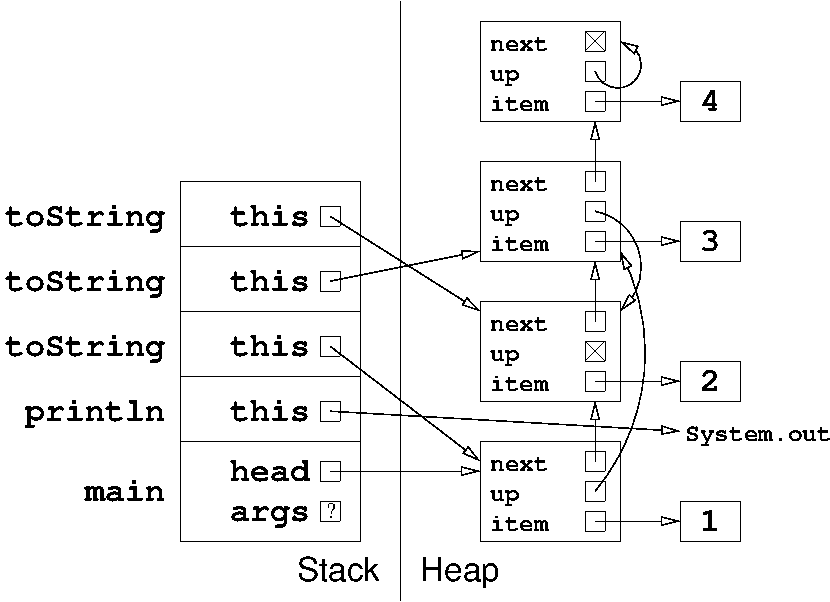
Problem 3. (8 points) The heap and the stack.
Note: in the following diagram, we are not grading the stack frame
for println.
If you left it out, don't worry.